Why comic prose is hard to film
Plot is only part of Good Omens. Much of the pleasure lies in how the narrator frames events: precise digressions, overextended comparisons, sudden qualifications and footnotes that behave like trapdoors. Remove that voice and the same incidents can feel mechanically whimsical.
Television cannot place every aside on screen without stopping the action. It uses selective voice-over, visual contradiction and performance instead. A grand announcement can be punctured by an ordinary object. A solemn pause can last just long enough to expose vanity. The joke moves from sentence structure into timing.
Aziraphale and Crowley become the spine
The novel has a broad comic ensemble and moves briskly among children, occultists, supernatural administrators and assorted agents of impending disaster. The adaptation gives greater continuous emphasis to Aziraphale and Crowley. Their long acquaintance supplies emotional continuity across the sprawling machinery.
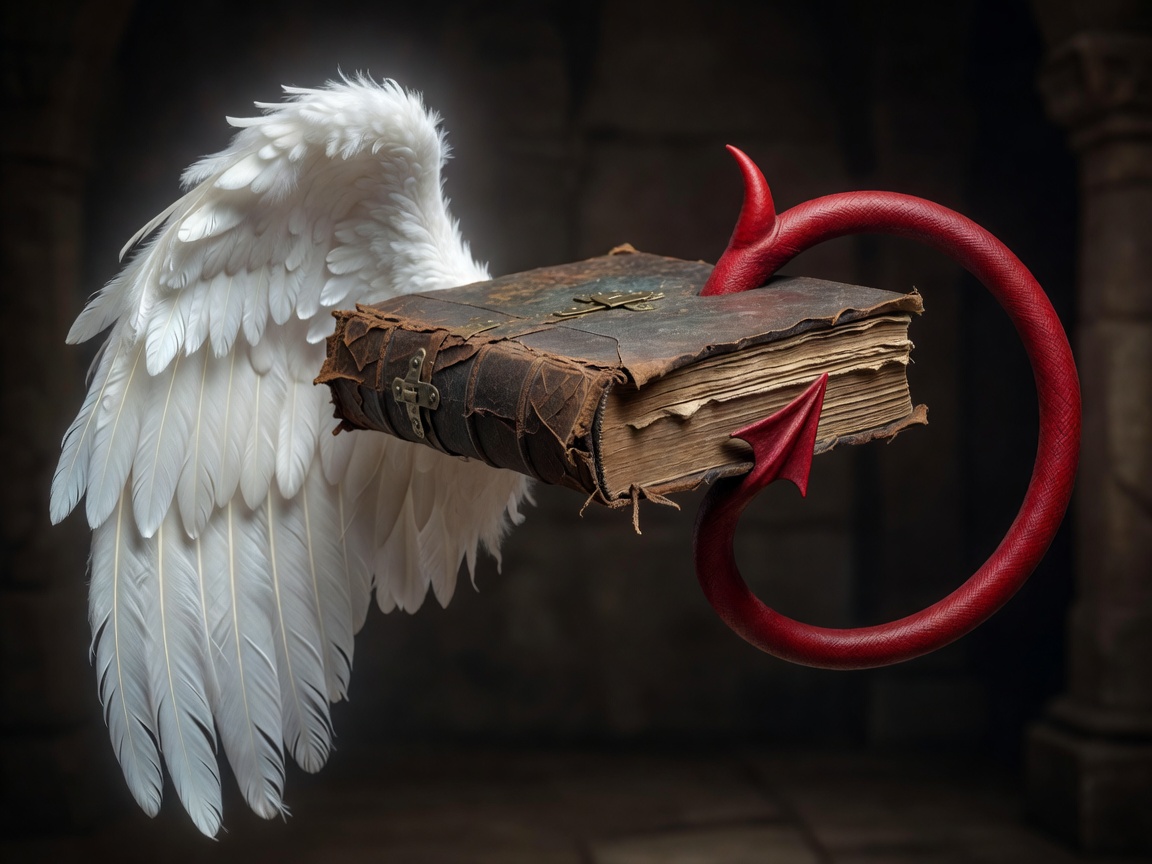
This concentration works because the pair already embody the book’s argument about labels and choices. Their official sides demand simple allegiance; their lived experience produces taste, compromise and mutual recognition. Television can build this through recurring gestures, familiar arguments and contrasting physical styles. Chemistry performs thematic work.
The expanded history earns its screen time
A sequence following the pair through different historical settings is an expansion rather than a straightforward transfer. Structurally, it delays the principal plot. Dramatically, it converts a stated history into accumulated evidence.
Each encounter repeats the basic opposition while altering its terms. Costumes and locations supply novelty, but the important movement is relational. Cooperation becomes easier, excuses become thinner and familiarity becomes attachment. By the time the main crisis tests their loyalties, the audience has seen the pattern that official doctrine asks them to betray.
Heaven and Hell become offices
The novel’s satire treats cosmic institutions with the suspicion usually reserved for badly managed organisations. Television makes that metaphor physical. Spaces, costumes and group behaviour distinguish the sides while exposing shared rigidity.
The risk is overstatement. A visual joke arrives all at once, whereas prose can lead the reader towards an absurd conclusion by stages. The adaptation balances this through restrained reactions. Characters often treat ludicrous procedure as entirely normal. Their seriousness lets the design be funny without requiring every line to announce the joke.
Managing the ensemble
The supporting plots need enough room to establish their own comic rhythms, yet every detour competes with the central countdown. Serial structure can assign focus more deliberately than a feature film, but it still needs regular convergence.
Objects and prophecies do much of the linking. A misplaced item, a misunderstood instruction or an inconveniently accurate prediction moves between storylines and carries cause with it. Editing can then cut on thematic resemblance or comic contrast. The ensemble feels connected before all its members occupy the same place.
Keeping stakes beneath the comedy
Comic apocalypse creates a balance problem. If the danger feels entirely weightless, choices have no cost. If the presentation becomes relentlessly grave, the material loses its defining angle. The adaptation keeps the stakes local as well as cosmic: a bookshop, a friendship, familiar pleasures and the possibility of choosing one’s own allegiance.
Those concrete attachments make the threat legible. The story does not require destruction to become visually grim before it matters. The characters care about a flawed world precisely because they know its minor inconveniences and specific delights. Comedy establishes value rather than distracting from it.
How to compare the versions
Find a passage where the joke belongs mainly to narration. Then ask where the television version places the comic beat. It may sit in a cut, a prop, a glance, music or the gap between what a character says and what the image proves.
Next, track how much connective tissue belongs to Aziraphale and Crowley. Their expanded prominence simplifies the ensemble’s emotional centre, but it can shift attention away from the novel’s more democratic chaos. The useful question is whether the concentration gives the scattered plots additional meaning or merely reduces their space. In the strongest sequences, it does both: it compresses while clarifying the argument about chosen loyalty.